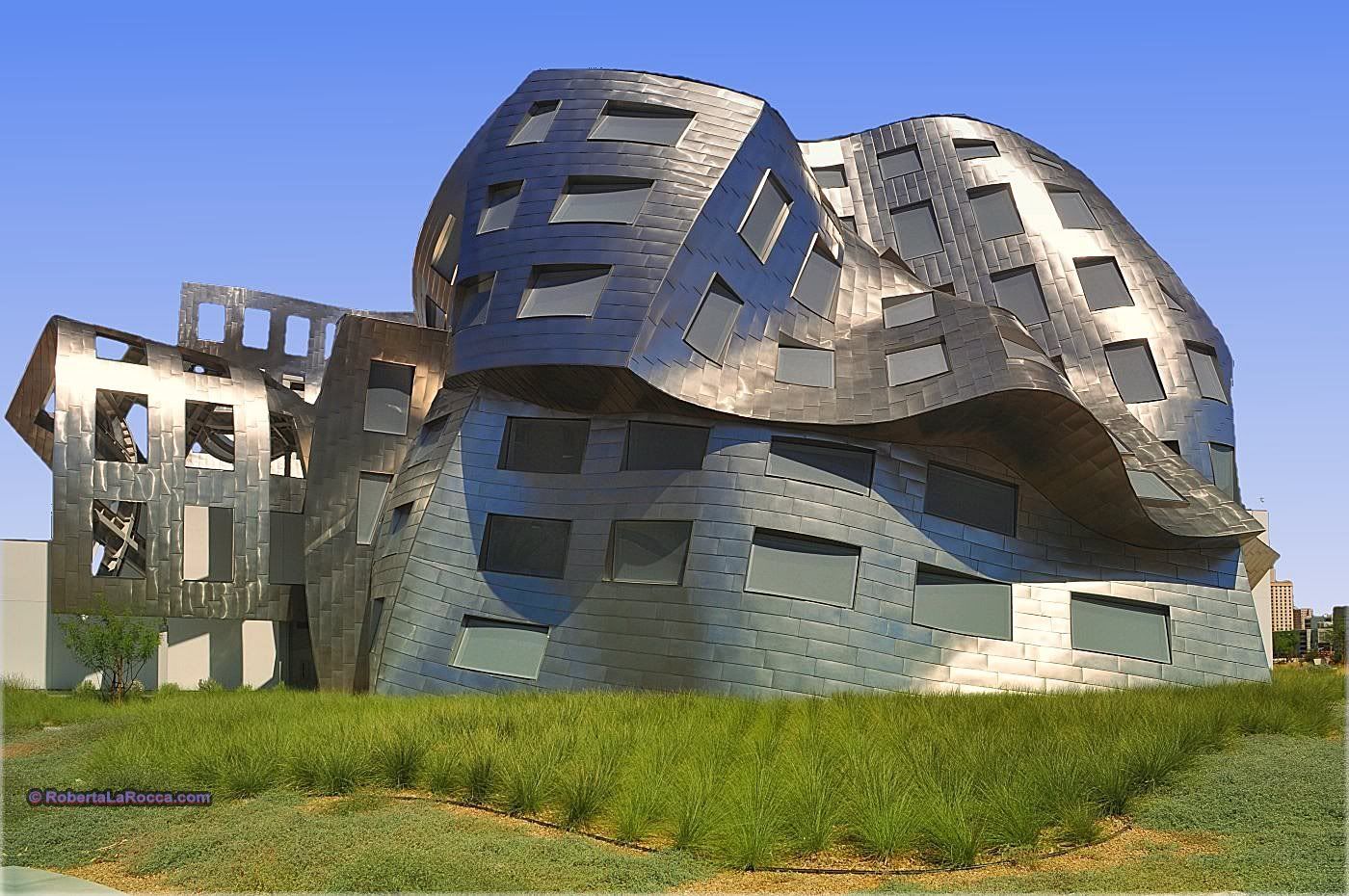
If only the sun would trace a regular and predictable path across the heavens, then architects wouldnt face this annoying problem. Perhaps a wizard in a future generation will invent some sort of computing engine that will be able to figure out how the sun reflects off glass.
“The architect should be equipped with knowledge of many branches of study and varied kinds of learning, for it is by his judgement that all work done by the other arts is put to test. … Let him be educated, skilful with the pencil, instructed in geometry, … Geometry, also, is of much assistance in architecture, and in particular it teaches us the use of the rule and compasses, by which especially we acquire readiness in making plans for buildings in their grounds, and rightly apply the square, the level, and the plummet. By means of optics, again, the light in buildings can be drawn from fixed quarters of the sky.” Vitruvius, ~15 BC.
And by geometry and optics also, light can be focused onto unsuspecting passersby.
The link is interesting, but this project and the Disney project in LA don’t focus the sun’s solar energy like the concave facades of the Las Vegas and London projects do.
I do find the comments from the Museum Tower’s architect to be a bit naive. Of course he has responsibility for the impact of his design on the environment. It is a little like saying “I don’t have to worry about what happens to the rain water that doesn’t permeate into the ground now that I have paved over 90% of my 20 acre site.” or “I have enough parking; I don’t have to consider the impact my project will have on the traffic in the neighborhood streets.” I hope, for his sake, he was quoted out of context.
I am not saying that it is easy to consider every impact that every design has on its neighbors, but large project should have this as a part of their basic design consideration (even when their client might not be on board).
It’s not rocket science - concave surfaces can concentrate light - but it’s nice to have a 10,000 word article say the same thing.
“In a study published last summer in the European Journal of Physics (EJP), two researchers from Germany performed a number of experiments that gave an in-depth explanation of why some skyscrapers have these undesired effects.” http://bit.ly/15Hc20A
yes, and who knew that Jaguars had plastic parts? (which is what was melted).
I agree with Peter that to ignore the possible effects of curved glass is hopelessly naive – especially because these issues have gotten so much popular press. The first time this happens, we can perhaps give the designer a pass, but if this happens every two or three years (as it seems to) then someone on the architect’s staff isn’t reading the popular press. (I would never assume that an architect do such a thing).
As George and Sheldon both pointed out – these things are somewhat predicable. You simply have to ask the right questions.
I am embarrassed by this architect’s attempts to she’d responsibility for his work. This guy probably uses unpaid interns and tells people that his firm can’t be profitable without free labor.